
Although some thought that the growing use of AI in software development would undermine the importance of nearshoring, actually it has only reshaped market preferences. Alongside the traditional budgetary considerations, factors such as engineering expertise, the stability of the service provider and its ecosystem, and the developer teams’ proficiency in using AI have also become key priorities. In our following analysis, we review the advantages and risks of the most popular nearshoring destinations of Central and Eastern Europe.
The importance of nearshoring seemed to be declining for a time, as remote work has now become fully accepted, and artificial intelligence has significantly transformed the software development process: it has accelerated workflows and even automated many tasks.
AI and Skilled Professionals: A Winning Combination
Indeed, AI is useful for handling routine tasks, however, this also increases the value of true engineering expertise. Today, clients are no longer just looking for cost-effective programming teams, but for business partners who are capable of:
- developing complex systems
- critically evaluating AI-generated code
- ensuring the security of processes and systems
- guaranteeing scalability when necessary
- and facilitating the business implementation of AI solutions.
In this context, artificial intelligence merely provides tools to a well-organized team of qualified professionals.
Thus, rather than simply minimizing costs, the outsourcing partner needs to ensure that the selected partner offers the best possible value for money. In exchange for the specified service fees, the client expects to work with a team that is highly qualified, stable, has low turnover, is committed to continuous improvement, and integrates state-of-the-art technologies into its work – a team they can collaborate with safely and efficiently, even over the long term and in a scalable way.
The Benefits of Geographic Proximity
Why is spatial proximity important when outsourcing work? It may not be entirely obvious at this point. In order to meet the criteria listed above, however, agile work practices are essential, which are based on the following prerequisites:
- fast and effective communication
- collaborative problem-solving
- continuous feedback.
These are most easily achievable when business partners are in the same or a similar time zone, so that their working hours fall within roughly the same time frame. Cultural similarities, widespread English language knowledge and a European-style business environment with its own set of regulations also contribute to smoother and more secure collaboration – the latter being perhaps one of the most important criteria today.
Romania on the Central and Eastern European Market
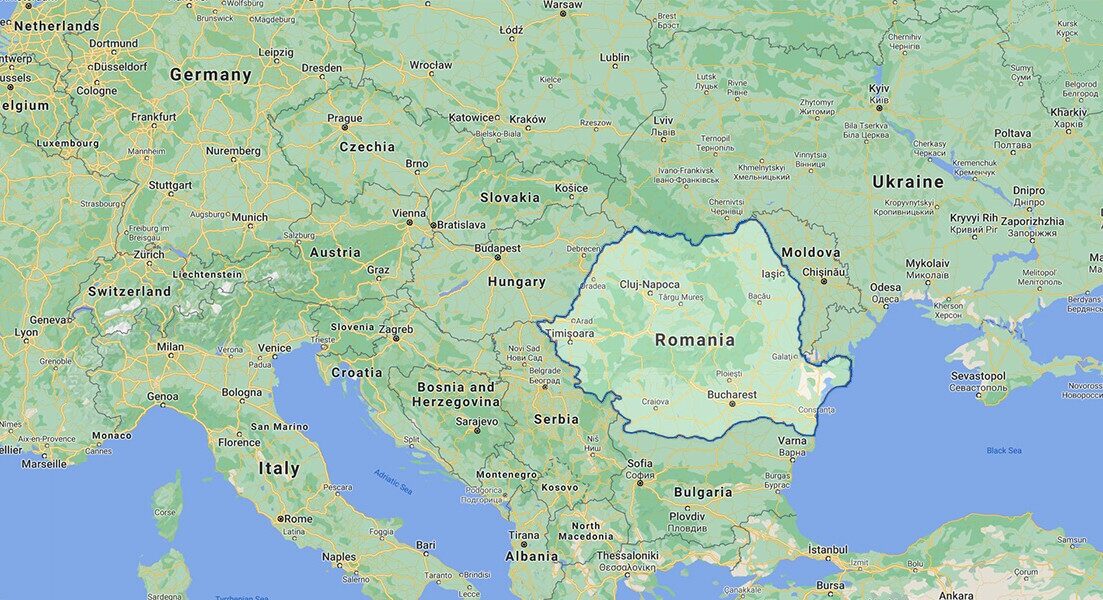
In the past decade, Romania has become one of the most attractive nearshoring destinations in Central and Eastern Europe. Many of the country’s cities, including Cluj-Napoca, Timișoara, Iași, Brașov, and Târgu Mureș, offer excellent engineering education, which attracts a large number of young people – even from abroad – to the region.
The professionals living and working here are not only highly qualified but, thanks to the country’s history of outsourcing, also have significant experience in implementing international projects. As a result, language skills are common, as is the ability to quickly master and integrate the latest technologies into workflows (such as enterprise systems, cloud-based solutions, and AI-powered applications). The legal and data protection safeguards resulting from EU membership are an important addition to this package.
Although Romania’s international reputation in the IT sector is not as widespread as Poland’s, an increasing number of Western European companies are choosing local companies as development partners due to the high quality of work and comparatively low costs.
An Overview of Nearshoring Destinations in CEE
Poland
Poland has one of the largest and best-known IT markets in the region. It hosts numerous international technology companies and IT centers with a vast pool of highly qualified senior professionals. However, salaries and service fees have risen significantly in the country, making Poland one of the most expensive nearshoring destinations in the area.
The Czech Republic
With its stable economic and business environment, as well as professionals known for their high level of technical expertise and reliability, the Czech Republic is an ideal choice for companies seeking a high-quality software development team. At the same time, the market is more limited in size than those of Poland or Romania, so challenges may arise when it comes to project scalability and quick team expansion.
Hungary
Engineering education in Hungary is of a very high standard. The capital, Budapest, is home to numerous international development centers, and the local technology ecosystem is a particularly good choice for projects requiring specialized expertise. At the same time, it has a smaller expert base than most of its neighbor countries, so building up larger project teams quickly can be challenging.
Bulgaria
Bulgaria’s IT sector is constantly evolving. In addition, thanks to its favorable pricing, it offers a significant competitive advantage, meaning that development teams based here are working on more and more international projects. However, its IT ecosystem is still smaller than that of the surrounding countries, so the pool of available specialists may be more limited for certain technologies or larger projects.
Slovakia
In the case of Slovakia, stable economic conditions and a well-organized technology sector attract long-term international partnerships. At the same time, the country has a limited workforce of highly qualified professionals, making it challenging to assemble larger project teams and potentially limiting the scalability of projects.
Serbia
Serbia offers numerous advantages in the international IT sector. Both its strong engineering education and competitive hourly rates make the country an attractive choice. Its experts enjoy an outstanding professional reputation, particularly in the field of custom software development projects. At the same time, the fact that Serbia is not a member of the European Union may imply certain data protection and legal risks or an additional administrative burden for clients.
Ukraine
Before the war broke out, Ukraine played a prominent role in the outsourcing market. The country’s highly skilled professionals have adapted to the extraordinary circumstances and continue to work with numerous international clients today. However, the country’s current situation may still pose a significant business risk, which is why some clients prefer more stable and predictable market alternatives.
Transylvania’s Unique Appeal
Given the widespread adoption of artificial intelligence, the importance of cybersecurity, and the need for cooperation based on stable partnerships, Romania could therefore be an attractive nearshoring destination in Central and Eastern Europe. Within the country, the Transylvanian region holds a special place, with unique economic, educational, and cultural advantages outlined below.
One of Transylvania’s greatest strengths is its diverse, multilingual environment. Romanian, Hungarian, and English languages are often used in the local business life, along with other languages in some cases. Another important feature is the multicultural, open-minded attitude, which fosters cooperation with foreign partners.
The region hosts numerous internationally recognized universities and colleges, which provide a steady supply of highly qualified IT professionals and engineers. Educated in cities such as Cluj-Napoca, Timișoara, Oradea, Târgu Mureș, and Brașov, among others, these professionals start their careers with a solid knowledge foundation and quickly adapt to new technologies as they arise, enabling them to thrive both at the country’s software development companies and on the international market.
Another advantage is that Transylvania’s IT ecosystem is not concentrated in a single major city. Compared to the capital, Bucharest, cities such as Cluj-Napoca, Târgu Mureș, Oradea, Brașov, Sibiu, and Odorheiu Secuiesc all host a remarkably high number of tech companies. All of these provide reliable, competent, and stable developer teams for both domestic and international collaborations.
At the same time, professionals from the region have also established cross-city professional communities that facilitate knowledge sharing, the exchange of experiences, and effective networking. All of this demonstrates that business culture and market competition do not stand in the way of regional collaboration or overall economic and professional growth, from which, of course, all market participants and the broader community can benefit.
Codespring | SOFTECH: 28 Years on the International Market
If this unique region has piqued your interest, please feel free to contact our experts for further advice, or browse our additional analyses and case studies on the region’s IT market.
And if you’d like to learn more about Codespring | SOFTECH, one of the region’s major IT companies as a potential nearshoring partner, you can reach SOFTECH at any of the options listed here.
by: Katalin Bálint